Made In Seoul
Made In Seoul
Made In Seoul
Made In Seoul
Picky
Picky
Picky
Picky


The Story of Picky
The Story of Picky
Jihong Lee, CEO of Picky
By Won
By Won
Published Dec 10, 2025
From an early age, Jihong Lee gravitated naturally toward leadership. Among his friends, he often initiated ideas and organized people. As president of the Enactus club at Seoul National University, he led his team to victory in a high-profile competition. Around the time of his graduation, he and a college friend began planning a noodle restaurant sparked by a trip to Indonesia. They poured themselves into the project, laying its foundations together. Although he ultimately stepped away before launch, the experience of building something from the ground up with a tight-knit team planted the seed that would later draw him back to entrepreneurship.
He began his career at one of the country’s leading tech companies. Even in an entry-level role, Jihong wanted to work with the drive and ownership of a founder. After just six months, he moved to Google Korea in 2010, which at the time felt more like a fast-growing startup than a global tech giant. The AdSense team he joined consisted of just two people, including himself, and despite being new to the company, he was entrusted with the responsibility of Country Manager. There, he found colleagues who approached their work with the same sense of ownership he valued. The workload was intense, the expectations high, but working shoulder-to-shoulder with that kind of relentlessly driven team became one of the defining experiences of his career.
Jihong later moved to Google’s San Francisco headquarters to work on Global AdMob Partnerships. The Bay Area pulsed with entrepreneurial energy—across the street, the WeWork stayed lit late into the night with founders building their companies. To Jihong, Google felt more like a mature enterprise. Feeling out of sync with that environment, he left to join Buzzvil, a Korean startup preparing for U.S. expansion, as head of U.S. operations. Buzzvil was an excellent company, but he recognized that in the B2B sales landscape, the advantage still favored local American teams.
One question became clear: could a team built around my strengths as a Korean founder become a global No. 1 company?
One of his former U.S. partners recommended he consider Supercell—the Helsinki-based creator of Clash of Clans and an unusual example of a global leader outside Silicon Valley. Jihong joined as the second hire at Supercell Korea and spent four years there. Conversations with the Supercell founders helped sharpen his perspective, and he finally gained the conviction he had been seeking.
Global success is determined not by a company’s location, but by the people and the culture they build. At Supercell, understanding customers worldwide mattered more than traditional notions of “market expertise.” They hired employees of diverse nationalities and gave each responsibility for customer support, localization, and community engagement. Even when the company had just thirty employees, more than ten were from abroad.
Korea is already a market the world learns from. Supercell’s founders often noted that Korean companies like Nexon drove some of the most important innovations in the online game industry, and that they learned the free-to-play model from them. The belief that Korea wasn’t positioned to build a global business was little more than an excuse. In any field, what mattered was being the best.
Focusing on What We Do Best
He once wondered if he possessed the "founder DNA." Without an engineering background and never driven by wealth, he gradually shaped his own philosophy of entrepreneurship throughout his career. When he finally committed to starting his own company, he acknowledged that there was still much to learn. That mindset allowed him to endure years of trial and error without getting discouraged, and to keep going even when results did not come quickly.
. . .
Jihong decided to double down on his strongest skill: global marketing and consumer understanding. In 2018 he founded JIVAKA, a platform that connected international customers with Korea’s advanced medical services. But soon after, the pandemic hit and revenue plummeted. Foreign customers who could no longer travel for procedures instead began buying Korean skincare products in large quantities. Seeing the emerging global demand for Korean beauty, Jihong decided to make a major pivot: partner with global influencers on social media to introduce K-beauty products to customers in the U.S. and beyond. Influencer-driven video content had already proven to be the most effective channel for JIVAKA’s medical acquisition funnels, giving the team a strong foundation. He rebranded the company as Picky.
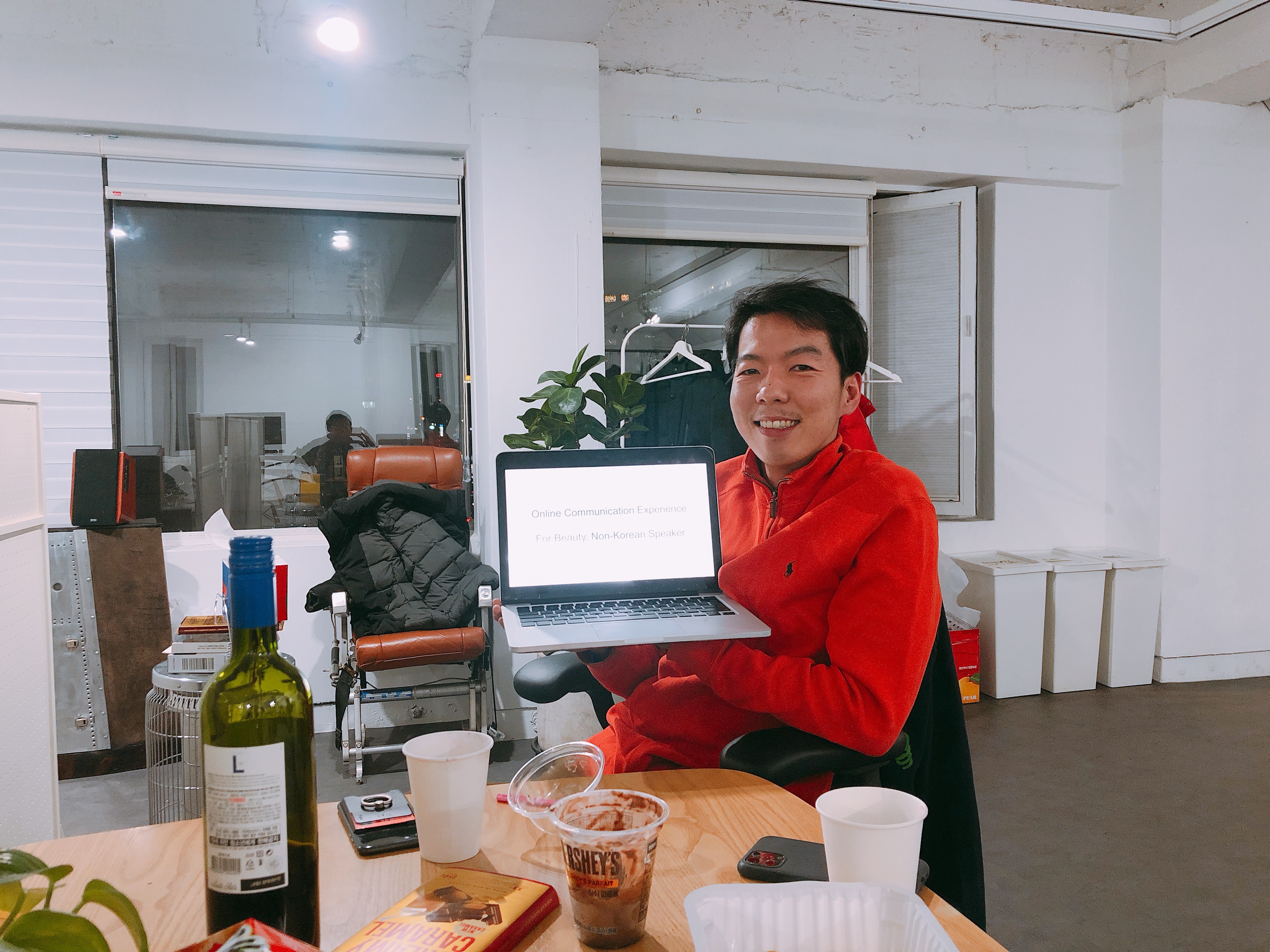
Jihong, 2019
The shift from medical to beauty allowed Jihong to fully leverage his marketing capabilities without constraints. In March 2020, the first version of the Picky app launched.
The challenge was the size of the market. At the time, K-beauty still had limited brand presence globally. Influencers who genuinely loved K-beauty were a small niche. Many people advised him to pursue a larger category (e.g., helping all global brands enter the U.S.), or to move toward distribution. But Jihong believed firmly in doing what he did best. There was no reason to enter a space where others already held the advantage.
He was convinced K-beauty would eventually go global—but the market was growing slowly, and the company had to survive long enough to reach that inflection point. He controlled spending aggressively and focused on self-sustainability. By 2023, Picky had reached breakeven. Yet it still wasn’t the right time to invest in growth. Disappointment set in, and several team members left. When five employees resigned at once in early 2024, it became one of the hardest moments of his entrepreneurial journey. However, soon after, K-beauty began experiencing explosive growth worldwide.
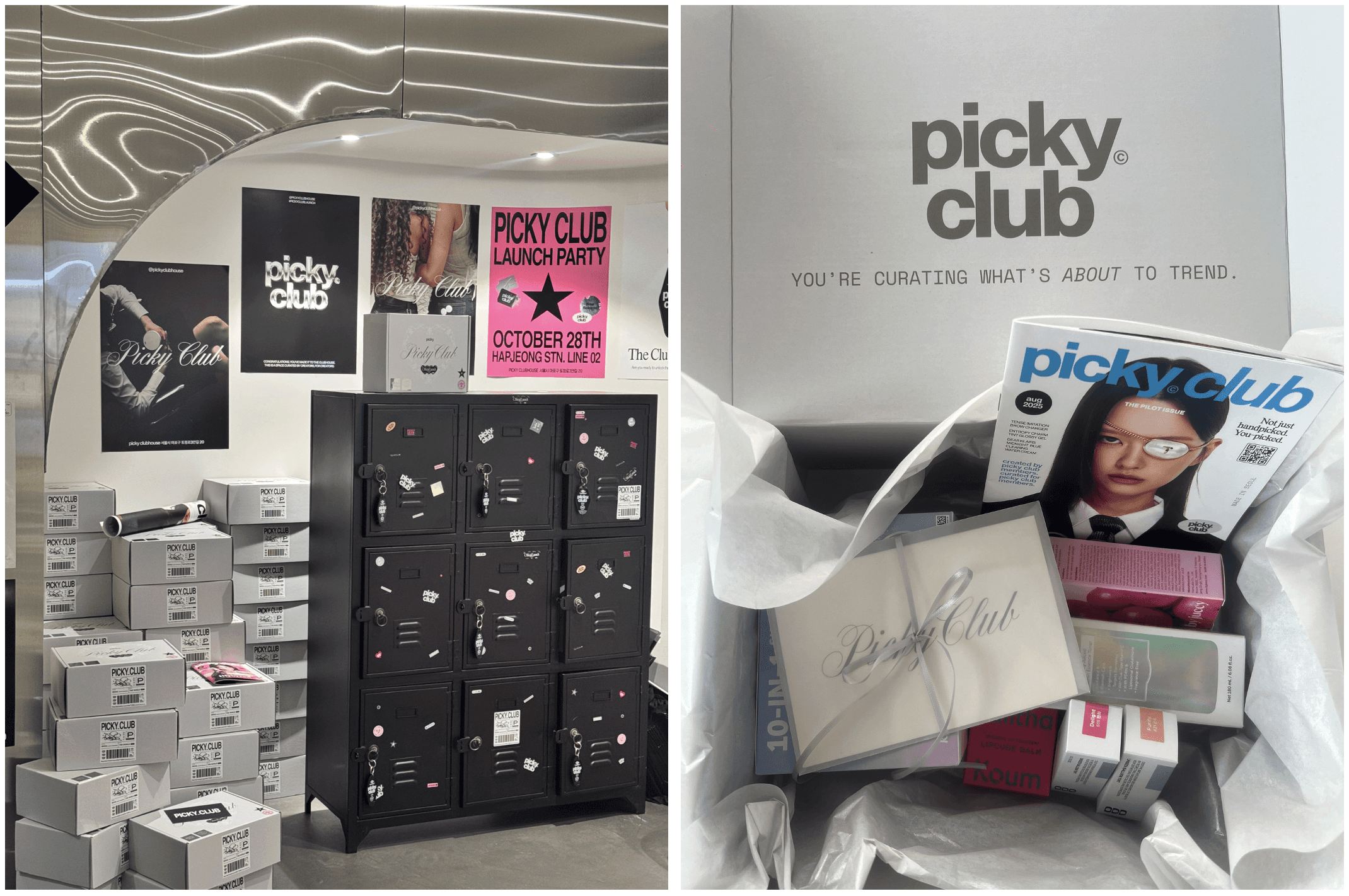
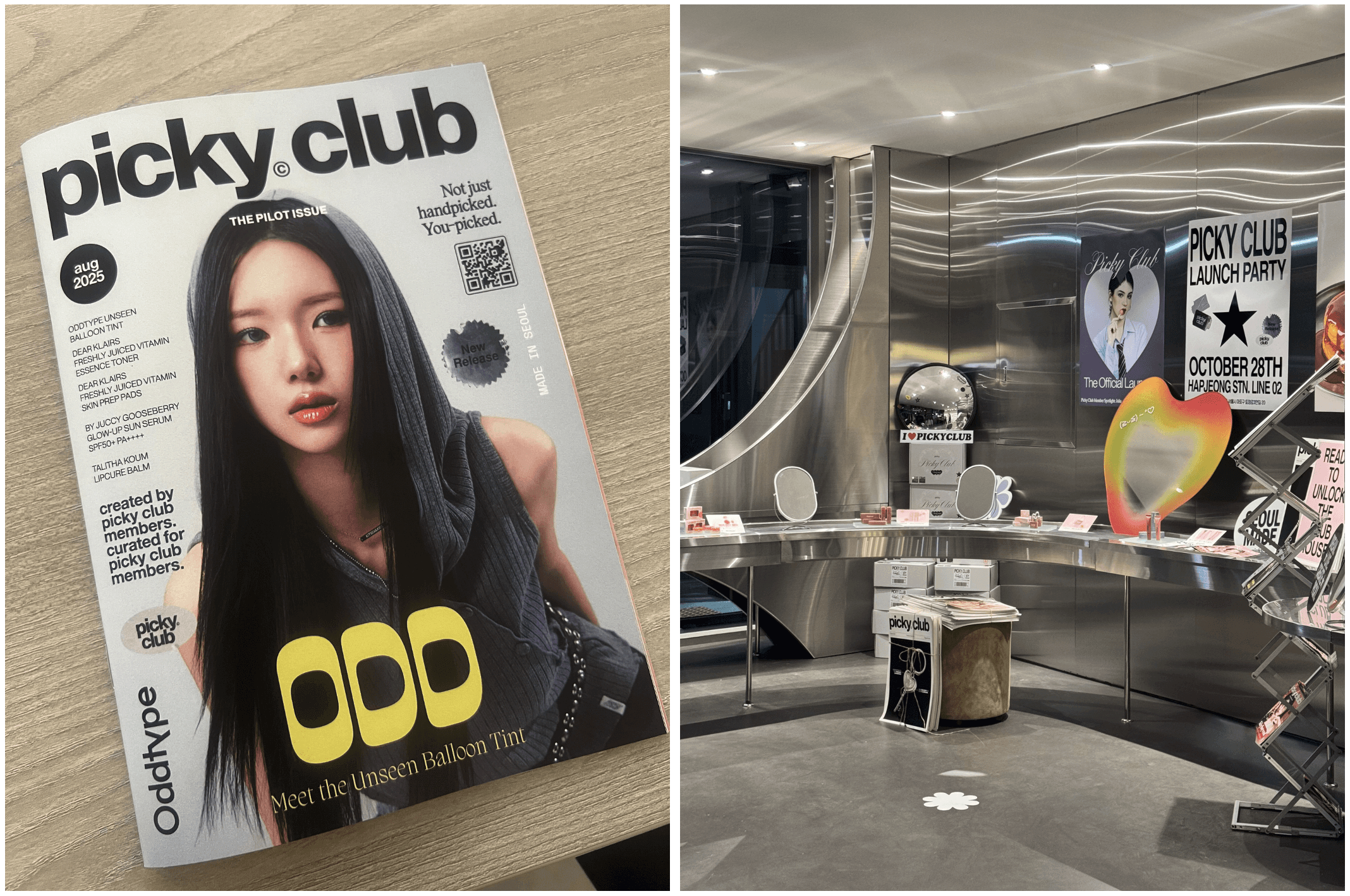
Brands started approaching Picky one after another to accelerate their international presence. Without any major marketing campaigns, revenue climbed organically. Even by Jihong’s high standards, Picky had unmistakably achieved product-market fit, following six years of steady effort. The momentum continues. In November 2025, more than five years after its initial launch, the Picky app recorded its highest monthly downloads ever. "Picky is the company that best introduces Korean brands to their global fans,” Jihong says.
Picky DNA
“Running a global business from Seoul ultimately means becoming a multinational team.”
— Jihong Lee, Picky
“While many assume global success requires leaving Korea, he is proving the opposite—building a truly global company from Seoul. His ability to maintain a clear vision and remain focused is deeply inspiring.”
— Honggyu Nam, Klim Ventures
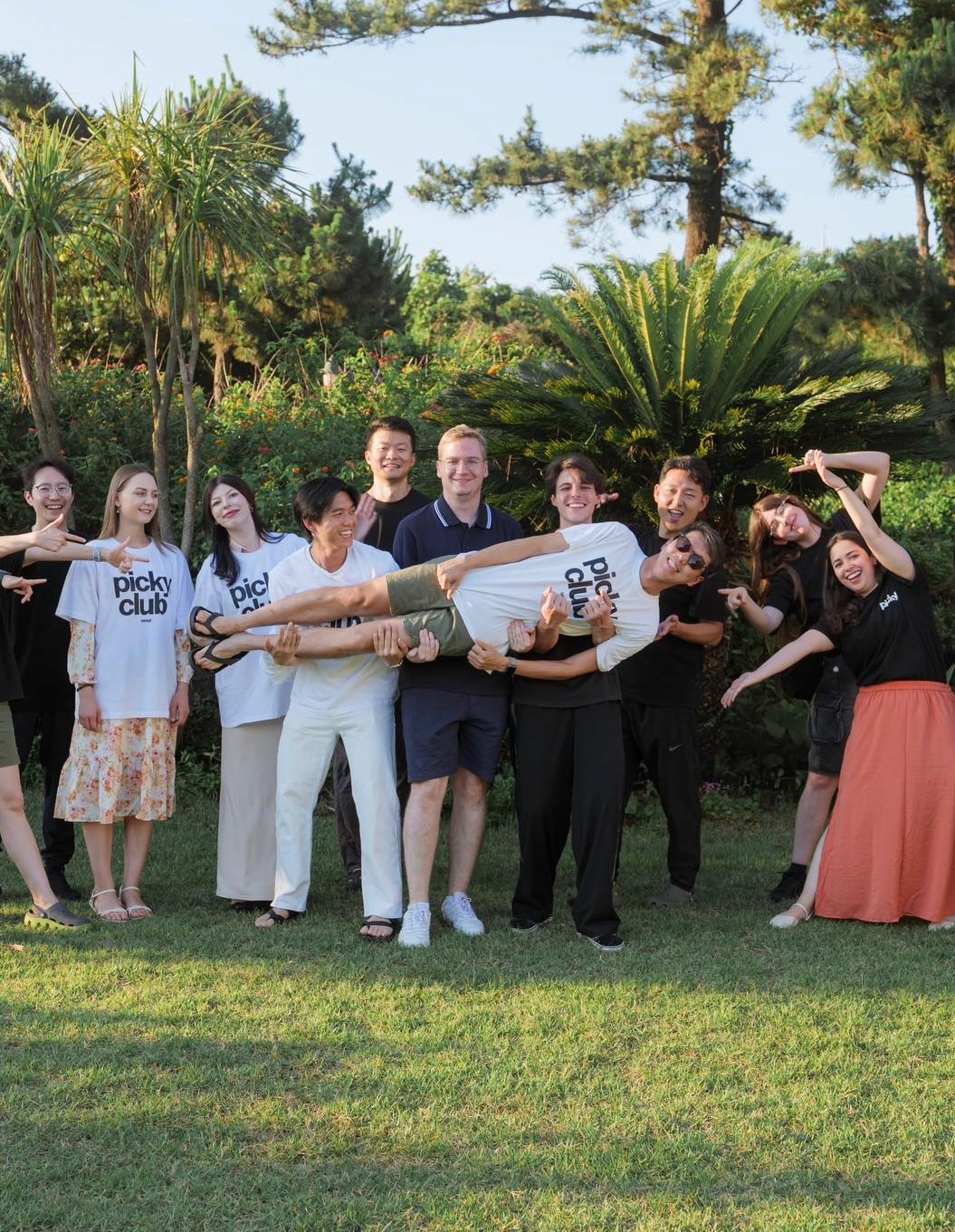
As the market expanded dramatically, competition intensified. Yet Picky continues to stand out as the leading K-beauty platform, sustained by fundamental strengths embedded in its DNA: a truly multinational, multicultural team. Jihong believed that marketing should be led by those who understand the customer best. The company serves two distinct customer groups: Korean beauty brands and multinational influencers. At Picky, Korean team members support domestic brands, while international members focus on influencers. This structure ensures that both sides receive the best possible experience.
Shifting the company’s operating system to English right after the pivot was one of the best decisions Jihong made as a founder. All official documents were written in English, enabling international members to integrate more smoothly and quickly. Until recently, they outnumbered Korean members. Many chose to relocate to Seoul, drawn by the city's lifestyle. Its safety—even late at night—cleanliness, efficient public transportation, and 24-hour convenience stores continue to attract global talent. Through Picky, Jihong demonstrates that global companies can be built in Seoul just as successfully as anywhere else.
His vision is to build a company where people genuinely resonate with its mission, work with intrinsic motivation, and take pride in what they create. Achieving that requires honest communication and a culture that aligns each individual’s values with the company’s direction. As he often notes, shaping that culture is his responsibility as a leader.
Picky is proactively expanding its role as it positions itself for the future. The opening of its LA office to enhance the 3PL experience is just the beginning of many initiatives to follow. Jihong believes that a broader concept—K‑lifestyle, building on K‑beauty—will soon emerge as a global consumer trend. When that day arrives, Picky will serve as the essential gateway for Korean brands pursuing worldwide expansion.
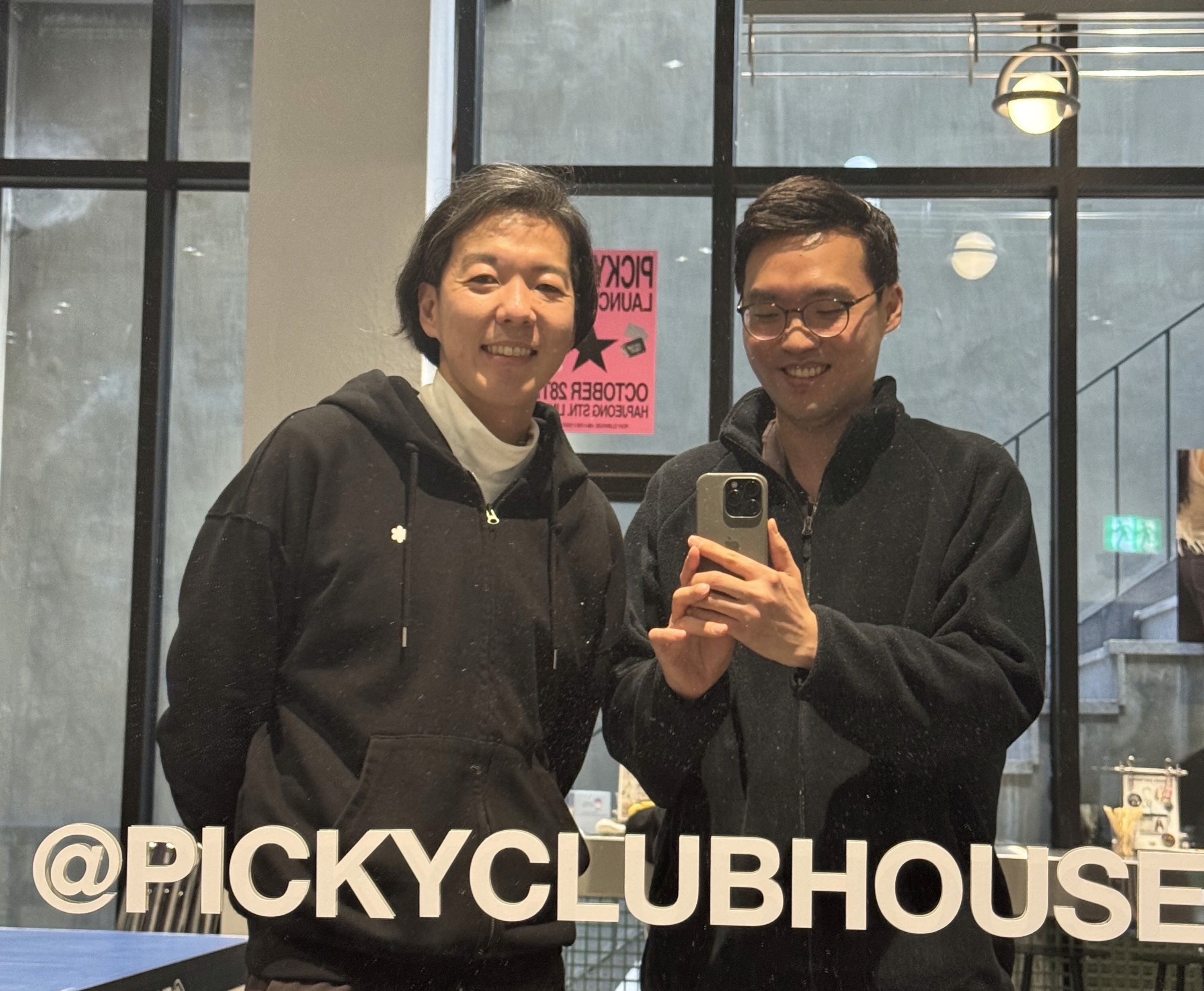
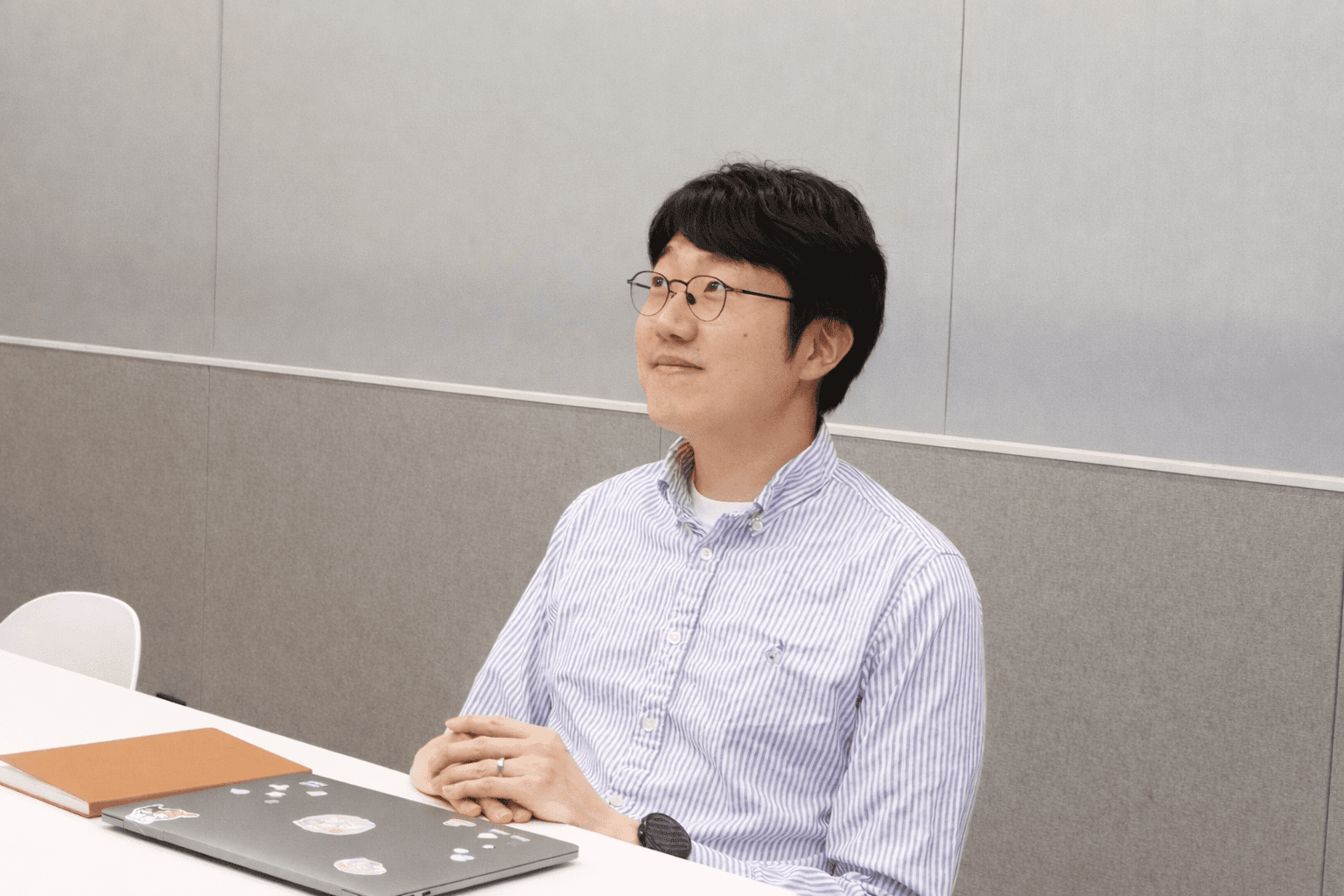
Jihong and Honggyu, 2025
From an early age, Jihong Lee gravitated naturally toward leadership. Among his friends, he often initiated ideas and organized people. As president of the Enactus club at Seoul National University, he led his team to victory in a high-profile competition. Around the time of his graduation, he and a college friend began planning a noodle restaurant sparked by a trip to Indonesia. They poured themselves into the project, laying its foundations together. Although he ultimately stepped away before launch, the experience of building something from the ground up with a tight-knit team planted the seed that would later draw him back to entrepreneurship.
He began his career at one of the country’s leading tech companies. Even in an entry-level role, Jihong wanted to work with the drive and ownership of a founder. After just six months, he moved to Google Korea in 2010, which at the time felt more like a fast-growing startup than a global tech giant. The AdSense team he joined consisted of just two people, including himself, and despite being new to the company, he was entrusted with the responsibility of Country Manager. There, he found colleagues who approached their work with the same sense of ownership he valued. The workload was intense, the expectations high, but working shoulder-to-shoulder with that kind of relentlessly driven team became one of the defining experiences of his career.
Jihong later moved to Google’s San Francisco headquarters to work on Global AdMob Partnerships. The Bay Area pulsed with entrepreneurial energy—across the street, the WeWork stayed lit late into the night with founders building their companies. To Jihong, Google felt more like a mature enterprise. Feeling out of sync with that environment, he left to join Buzzvil, a Korean startup preparing for U.S. expansion, as head of U.S. operations. Buzzvil was an excellent company, but he recognized that in the B2B sales landscape, the advantage still favored local American teams.
One question became clear: could a team built around my strengths as a Korean founder become a global No. 1 company?
One of his former U.S. partners recommended he consider Supercell—the Helsinki-based creator of Clash of Clans and an unusual example of a global leader outside Silicon Valley. Jihong joined as the second hire at Supercell Korea and spent four years there. Conversations with the Supercell founders helped sharpen his perspective, and he finally gained the conviction he had been seeking.
Global success is determined not by a company’s location, but by the people and the culture they build. At Supercell, understanding customers worldwide mattered more than traditional notions of “market expertise.” They hired employees of diverse nationalities and gave each responsibility for customer support, localization, and community engagement. Even when the company had just thirty employees, more than ten were from abroad.
Korea is already a market the world learns from. Supercell’s founders often noted that Korean companies like Nexon drove some of the most important innovations in the online game industry, and that they learned the free-to-play model from them. The belief that Korea wasn’t positioned to build a global business was little more than an excuse. In any field, what mattered was being the best.
Focusing on What We Do Best
He once wondered if he possessed the "founder DNA." Without an engineering background and never driven by wealth, he gradually shaped his own philosophy of entrepreneurship throughout his career. When he finally committed to starting his own company, he acknowledged that there was still much to learn. That mindset allowed him to endure years of trial and error without getting discouraged, and to keep going even when results did not come quickly.
. . .
Jihong decided to double down on his strongest skill: global marketing and consumer understanding. In 2018 he founded JIVAKA, a platform that connected international customers with Korea’s advanced medical services. But soon after, the pandemic hit and revenue plummeted. Foreign customers who could no longer travel for procedures instead began buying Korean skincare products in large quantities. Seeing the emerging global demand for Korean beauty, Jihong decided to make a major pivot: partner with global influencers on social media to introduce K-beauty products to customers in the U.S. and beyond. Influencer-driven video content had already proven to be the most effective channel for JIVAKA’s medical acquisition funnels, giving the team a strong foundation. He rebranded the company as Picky.

Jihong, 2019
The shift from medical to beauty allowed Jihong to fully leverage his marketing capabilities without constraints. In March 2020, the first version of the Picky app launched.
The challenge was the size of the market. At the time, K-beauty still had limited brand presence globally. Influencers who genuinely loved K-beauty were a small niche. Many people advised him to pursue a larger category (e.g., helping all global brands enter the U.S.), or to move toward distribution. But Jihong believed firmly in doing what he did best. There was no reason to enter a space where others already held the advantage.
He was convinced K-beauty would eventually go global—but the market was growing slowly, and the company had to survive long enough to reach that inflection point. He controlled spending aggressively and focused on self-sustainability. By 2023, Picky had reached breakeven. Yet it still wasn’t the right time to invest in growth. Disappointment set in, and several team members left. When five employees resigned at once in early 2024, it became one of the hardest moments of his entrepreneurial journey. However, soon after, K-beauty began experiencing explosive growth worldwide.
Brands started approaching Picky one after another to accelerate their international presence. Without any major marketing campaigns, revenue climbed organically. Even by Jihong’s high standards, Picky had unmistakably achieved product-market fit, following six years of steady effort. The momentum continues. In November 2025, more than five years after its initial launch, the Picky app recorded its highest monthly downloads ever. "Picky is the company that best introduces Korean brands to their global fans,” Jihong says.


Picky DNA
“Running a global business from Seoul ultimately means becoming a multinational team.”
— Jihong Lee, Picky
“While many assume global success requires leaving Korea, he is proving the opposite—building a truly global company from Seoul. His ability to maintain a clear vision and remain focused is deeply inspiring.”
— Honggyu Nam, Klim Ventures
As the market expanded dramatically, competition intensified. Yet Picky continues to stand out as the leading K-beauty platform, sustained by fundamental strengths embedded in its DNA: a truly multinational, multicultural team. Jihong believed that marketing should be led by those who understand the customer best. The company serves two distinct customer groups: Korean beauty brands and multinational influencers. At Picky, Korean team members support domestic brands, while international members focus on influencers. This structure ensures that both sides receive the best possible experience.
Shifting the company’s operating system to English right after the pivot was one of the best decisions Jihong made as a founder. All official documents were written in English, enabling international members to integrate more smoothly and quickly. Until recently, they outnumbered Korean members. Many chose to relocate to Seoul, drawn by the city's lifestyle. Its safety—even late at night—cleanliness, efficient public transportation, and 24-hour convenience stores continue to attract global talent. Through Picky, Jihong demonstrates that global companies can be built in Seoul just as successfully as anywhere else.
His vision is to build a company where people genuinely resonate with its mission, work with intrinsic motivation, and take pride in what they create. Achieving that requires honest communication and a culture that aligns each individual’s values with the company’s direction. As he often notes, shaping that culture is his responsibility as a leader.
Picky is proactively expanding its role as it positions itself for the future. The opening of its LA office to enhance the 3PL experience is just the beginning of many initiatives to follow. Jihong believes that a broader concept—K‑lifestyle, building on K‑beauty—will soon emerge as a global consumer trend. When that day arrives, Picky will serve as the essential gateway for Korean brands pursuing worldwide expansion.

Jihong and Honggyu, 2025
From an early age, Jihong Lee gravitated naturally toward leadership. Among his friends, he often initiated ideas and organized people. As president of the Enactus club at Seoul National University, he led his team to victory in a high-profile competition. Around the time of his graduation, he and a college friend began planning a noodle restaurant sparked by a trip to Indonesia. They poured themselves into the project, laying its foundations together. Although he ultimately stepped away before launch, the experience of building something from the ground up with a tight-knit team planted the seed that would later draw him back to entrepreneurship.
He began his career at one of the country’s leading tech companies. Even in an entry-level role, Jihong wanted to work with the drive and ownership of a founder. After just six months, he moved to Google Korea in 2010, which at the time felt more like a fast-growing startup than a global tech giant. The AdSense team he joined consisted of just two people, including himself, and despite being new to the company, he was entrusted with the responsibility of Country Manager. There, he found colleagues who approached their work with the same sense of ownership he valued. The workload was intense, the expectations high, but working shoulder-to-shoulder with that kind of relentlessly driven team became one of the defining experiences of his career.
Jihong later moved to Google’s San Francisco headquarters to work on Global AdMob Partnerships. The Bay Area pulsed with entrepreneurial energy—across the street, the WeWork stayed lit late into the night with founders building their companies. To Jihong, Google felt more like a mature enterprise. Feeling out of sync with that environment, he left to join Buzzvil, a Korean startup preparing for U.S. expansion, as head of U.S. operations. Buzzvil was an excellent company, but he recognized that in the B2B sales landscape, the advantage still favored local American teams.
One question became clear: could a team built around my strengths as a Korean founder become a global No. 1 company?
One of his former U.S. partners recommended he consider Supercell—the Helsinki-based creator of Clash of Clans and an unusual example of a global leader outside Silicon Valley. Jihong joined as the second hire at Supercell Korea and spent four years there. Conversations with the Supercell founders helped sharpen his perspective, and he finally gained the conviction he had been seeking.
Global success is determined not by a company’s location, but by the people and the culture they build. At Supercell, understanding customers worldwide mattered more than traditional notions of “market expertise.” They hired employees of diverse nationalities and gave each responsibility for customer support, localization, and community engagement. Even when the company had just thirty employees, more than ten were from abroad.
Korea is already a market the world learns from. Supercell’s founders often noted that Korean companies like Nexon drove some of the most important innovations in the online game industry, and that they learned the free-to-play model from them. The belief that Korea wasn’t positioned to build a global business was little more than an excuse. In any field, what mattered was being the best.
Focusing on What We Do Best
He once wondered if he possessed the "founder DNA." Without an engineering background and never driven by wealth, he gradually shaped his own philosophy of entrepreneurship throughout his career. When he finally committed to starting his own company, he acknowledged that there was still much to learn. That mindset allowed him to endure years of trial and error without getting discouraged, and to keep going even when results did not come quickly.
. . .
Jihong decided to double down on his strongest skill: global marketing and consumer understanding. In 2018 he founded JIVAKA, a platform that connected international customers with Korea’s advanced medical services. But soon after, the pandemic hit and revenue plummeted. Foreign customers who could no longer travel for procedures instead began buying Korean skincare products in large quantities. Seeing the emerging global demand for Korean beauty, Jihong decided to make a major pivot: partner with global influencers on social media to introduce K-beauty products to customers in the U.S. and beyond. Influencer-driven video content had already proven to be the most effective channel for JIVAKA’s medical acquisition funnels, giving the team a strong foundation. He rebranded the company as Picky.

Jihong, 2019
The shift from medical to beauty allowed Jihong to fully leverage his marketing capabilities without constraints. In March 2020, the first version of the Picky app launched.
The challenge was the size of the market. At the time, K-beauty still had limited brand presence globally. Influencers who genuinely loved K-beauty were a small niche. Many people advised him to pursue a larger category (e.g., helping all global brands enter the U.S.), or to move toward distribution. But Jihong believed firmly in doing what he did best. There was no reason to enter a space where others already held the advantage.
He was convinced K-beauty would eventually go global—but the market was growing slowly, and the company had to survive long enough to reach that inflection point. He controlled spending aggressively and focused on self-sustainability. By 2023, Picky had reached breakeven. Yet it still wasn’t the right time to invest in growth. Disappointment set in, and several team members left. When five employees resigned at once in early 2024, it became one of the hardest moments of his entrepreneurial journey. However, soon after, K-beauty began experiencing explosive growth worldwide.
Brands started approaching Picky one after another to accelerate their international presence. Without any major marketing campaigns, revenue climbed organically. Even by Jihong’s high standards, Picky had unmistakably achieved product-market fit, following six years of steady effort. The momentum continues. In November 2025, more than five years after its initial launch, the Picky app recorded its highest monthly downloads ever. "Picky is the company that best introduces Korean brands to their global fans,” Jihong says.


Picky DNA
“Running a global business from Seoul ultimately means becoming a multinational team.”
— Jihong Lee, Picky
“While many assume global success requires leaving Korea, he is proving the opposite—building a truly global company from Seoul. His ability to maintain a clear vision and remain focused is deeply inspiring.”
— Honggyu Nam, Klim Ventures
As the market expanded dramatically, competition intensified. Yet Picky continues to stand out as the leading K-beauty platform, sustained by fundamental strengths embedded in its DNA: a truly multinational, multicultural team. Jihong believed that marketing should be led by those who understand the customer best. The company serves two distinct customer groups: Korean beauty brands and multinational influencers. At Picky, Korean team members support domestic brands, while international members focus on influencers. This structure ensures that both sides receive the best possible experience.
Shifting the company’s operating system to English right after the pivot was one of the best decisions Jihong made as a founder. All official documents were written in English, enabling international members to integrate more smoothly and quickly. Until recently, they outnumbered Korean members. Many chose to relocate to Seoul, drawn by the city's lifestyle. Its safety—even late at night—cleanliness, efficient public transportation, and 24-hour convenience stores continue to attract global talent. Through Picky, Jihong demonstrates that global companies can be built in Seoul just as successfully as anywhere else.
His vision is to build a company where people genuinely resonate with its mission, work with intrinsic motivation, and take pride in what they create. Achieving that requires honest communication and a culture that aligns each individual’s values with the company’s direction. As he often notes, shaping that culture is his responsibility as a leader.
Picky is proactively expanding its role as it positions itself for the future. The opening of its LA office to enhance the 3PL experience is just the beginning of many initiatives to follow. Jihong believes that a broader concept—K‑lifestyle, building on K‑beauty—will soon emerge as a global consumer trend. When that day arrives, Picky will serve as the essential gateway for Korean brands pursuing worldwide expansion.

Jihong and Honggyu, 2025
FOUNDER'S PARTNER
FOUNDER'S PARTNER
ⓒ 2026 Klim ventures

