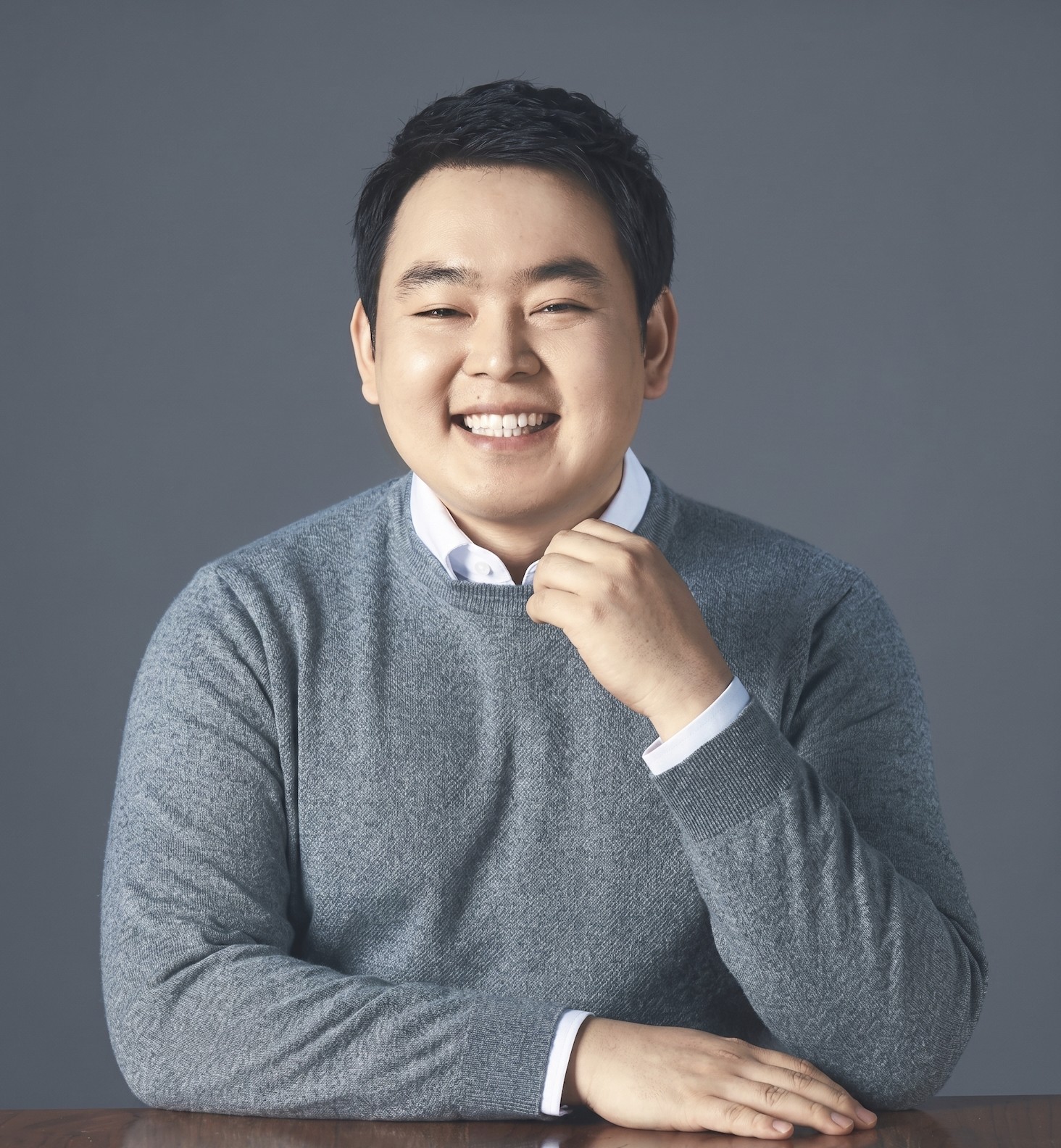
Hyeonseob Nam's obsessive focus is what made him an exceptional AI researcher. As a child, his parents would tell him to get some sleep — not because he wasn't studying, but because he wouldn't stop. In middle school, he heard about science high schools from a friend and prepared for the entrance exam on his own. At Hansung Science High School, he encountered programming for the first time and took to it immediately, becoming the best in his class. He went on to study computer science at POSTECH — a field his teachers and peers had steered him away from — and graduated at the top of his class. He wanted to go deeper, so he entered graduate school, specialized in AI, and quickly stood out as a researcher.
In 2015, while still in graduate school, he entered the Visual Object Tracking challenge at ICCV — one of the most prestigious international conferences in computer vision. He was the first to apply deep learning to the competition. He won, and the gap between first and second place was significant. The paper has since been cited thousands of times. What made the difference was the willingness to run experiment after experiment, to stay with a problem long after others might have moved on. That's always been Hyeonseob's edge.
But he didn't want to stay in the lab. He wanted to build things people actually use. He converted his PhD to a master's, graduated at the top of his class, and joined Naver. There, he learned what it takes to turn an algorithm into a product — the gap between research and a live service, and everything that has to happen in between. It was less than two years, but he learned fast.
Then came Lunit. He joined as an early member and spent nearly six years there, deeply immersed in AI research and development — sharpening his technical capabilities as the company grew. But those years gave him something beyond the research. He came to understand what it actually takes to operate in healthcare: regulatory approvals, clinical workflows, the competing interests of every stakeholder in the system. Great technology, he learned, is necessary but needs the whole system behind it to matter. He went on to serve as CTO at Mediwhale, where he developed a broader perspective on AI businesses as a whole.
Around the time when Hyeonseob took a break after leaving Mediwhale, three of his grandparents passed away in close succession. All of them had lived past ninety. But in their final years — some for five years, others for fifteen — they were bedridden. Living long and living well, he realized, are two different things.
He had been reading about the history of medicine. For the past century or two, medicine had largely focused on treating disease after it occurs. Life expectancy improved dramatically. But healthspan — the years spent in good health — lagged behind. The gap could only be closed by catching disease earlier. Before symptoms. Before damage. And clinical AI was finally making that possible.
End preventable heart disease
When Hyeonseob decided to found Evom AI, most tried to talk him out of it. Healthcare industry is highly regulated, complex, and slow to penetrate. The people who knew the space were often the most skeptical. But building wealth was never the primary motivation. "If that were the only goal, I wouldn't have chosen this." What drove him was the chance to work on one of the most important problems facing humanity — and the belief that it could actually be solved.
Yet where others saw risk, Hyeonseob saw opportunity. The skepticism, if anything, confirmed he was seeing something others weren't. What looks like a slow, difficult space from the outside looks very different to someone who has spent years actually building within it. The structural forces are already in motion. An aging population, the mounting unsustainability of a fee-for-service system built around treating illness rather than preventing it, and a broad shift toward value-based care — outcomes over volume — are reshaping how healthcare is delivered and paid for. At the same time, AI is enabling diagnostic capabilities that were simply out of reach before. "This shift is already happening," he says. "It might take years, but the direction is inevitable."
After founding Evom AI, the team spent several months identifying where early detection would have the greatest impact. The answer was cardiovascular disease. It is the leading cause of death worldwide, accounting for nearly one in three deaths globally. Up to 80% of cases are considered preventable. The problem isn't that treatments don't exist — it's that the majority of cardiovascular events occur with limited or no preceding clinical warning, often in individuals previously considered low-risk. By the time most cases are caught, serious damage has already been done. Evom AI's goal is to change that: detect and predict heart disease early enough to intervene before it becomes irreversible.
End preventable heart disease. Smallpox was eradicated. Hyeonseob believes preventable cardiovascular disease can be too. The goal is to give people ten, twenty more years of healthy life.

Team Evom AI
Evom AI — Respect for People
The most important principle at Evom AI is simple: Respect for people. For Hyeonseob, Evom AI exists to use business as a means of doing good for people — not the other way around. It's a distinction that sounds obvious but is easy to lose. In healthcare especially — where information asymmetry and systemic complexity already put patients at a disadvantage — good intentions can quietly erode. Evom AI was founded with this in mind.
The co-founders go back to their days at Lunit. The CTO, Hyunjae Lee, worked alongside Hyeonseob for nearly six years — his most trusted collaborator. The CMO, Hyunsuk Yoo, is a physician who also led clinical research and development, one of those rare people who understands both the science and the engineering. The COO, Janice Jung, led business development and marketing at Lunit and is, above all, someone who genuinely cares about people. Together, they've been in this field since before it was a recognized industry — through the technical breakthroughs, the regulatory hurdles, the slow process of earning trust in clinical settings. "This is the team best positioned to do this," Hyeonseob says.
Respect for people extends inward, too. Evom AI operates without the rigid hierarchy common in healthcare settings — every team member is treated as an equal, regardless of title or background.
When it comes to hiring, Hyeonseob cares less about credentials than about how someone approaches their work. He references an anecdote about Jensen Huang washing dishes as a young man — thinking carefully about how to do it better. That orientation — caring about the quality of your work regardless of what the work is — is what he looks for in people.
He holds himself to the same standard. Rather than calculating too far ahead, he focuses on doing what he can, well, right now. When he hits a wall, he looks for another way through. He doesn't quit. As a leader, what matters most to him is staying true to why Evom AI started. "The specifics of the business will change. But why we started, and how we want to operate — that I don't want to lose."
Evom AI is now going to market for the first time. The past year was about building. The next year is about proving — showing in real clinical settings that their solutions genuinely move the needle for physicians and patients. "We need to validate what we've believed. Then we scale."
Before committing to this path, Hyeonseob asked himself a question: what would make me proud — not just as a founder, but as a father? Evom AI's vision is his answer. It's a long game. But the problem is real, the timing is right, and the right team is here.